The rapid deployment of 5G networks has introduced higher frequencies, wider bandwidths,
and more complex antenna technologies. To ensure reliable performance, 5G base stations
require advanced testing systems capable of measuring multiple RF parameters with high
accuracy and efficiency.
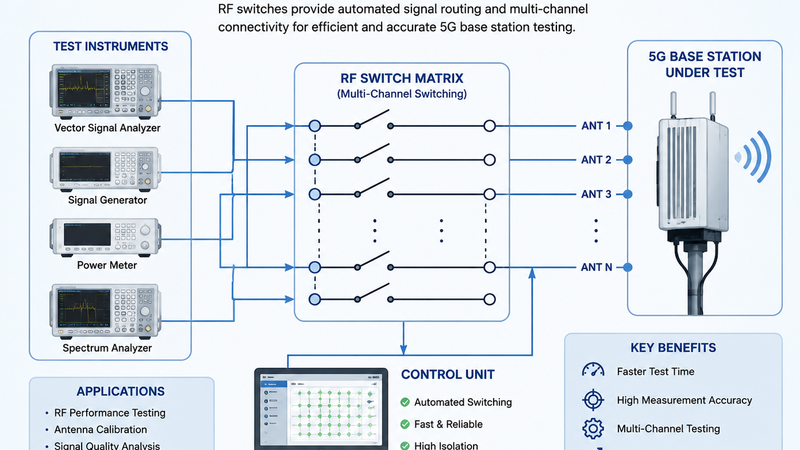
RF switches play a critical role in modern 5G base station testing by enabling automated
signal routing, multi-channel measurements, and flexible test configurations. From
production verification to research and development, RF microwave switches help engineers
improve testing speed, accuracy, and reliability.
What Are RF Switches?
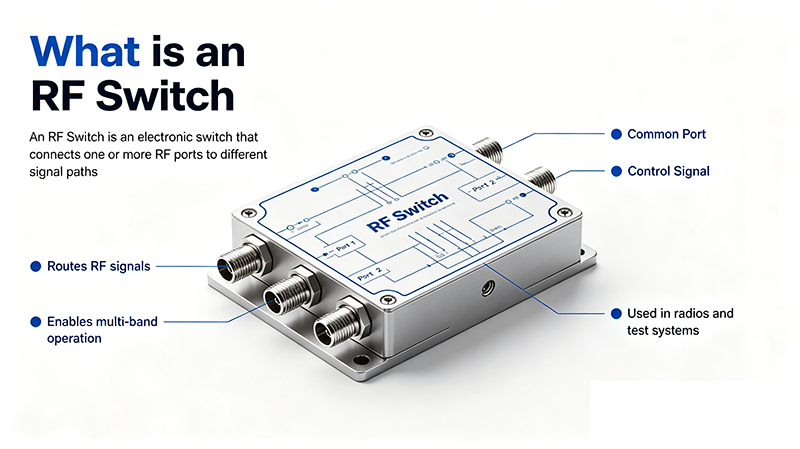
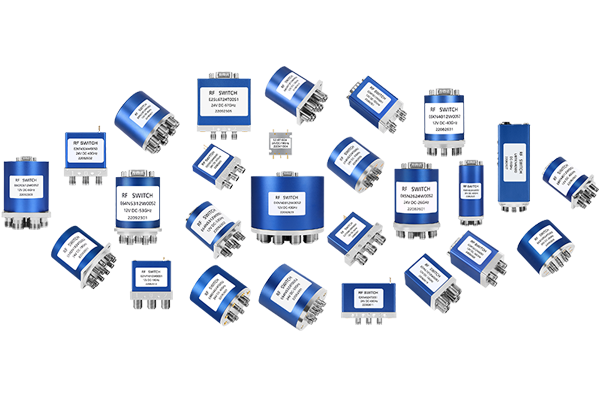
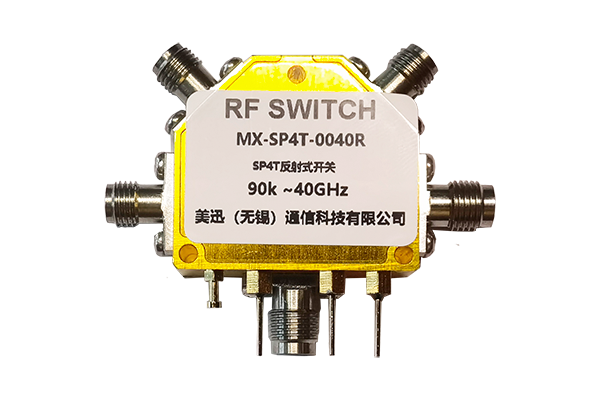
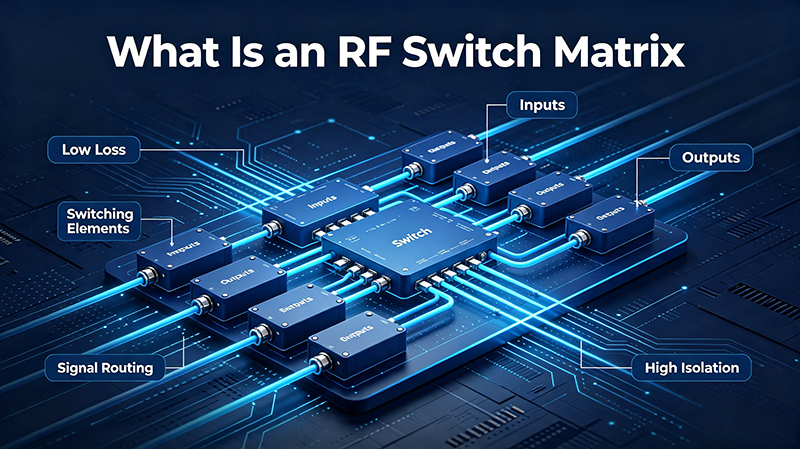
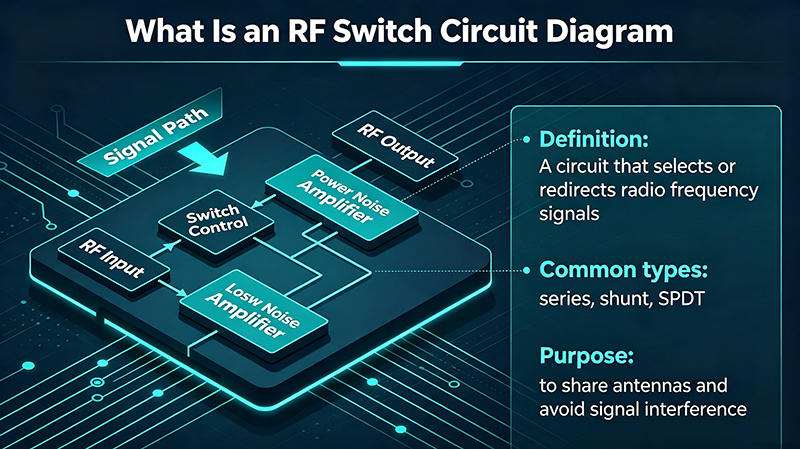
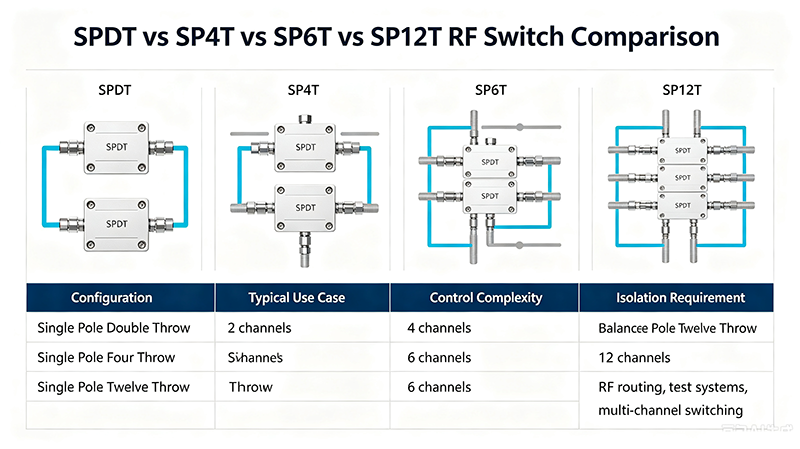
An RF switch is a microwave component used to control the connection between multiple RF
signal paths. It allows engineers to switch signals between different channels, antennas,
instruments, or devices under test without manually reconnecting cables.
RF switches are widely used in automated test equipment (ATE), wireless communication systems,
radar systems, satellite communication, and 5G infrastructure testing.
In 5G testing environments, RF switches provide fast and reliable signal routing,
allowing a single test system to evaluate multiple RF paths, frequency bands, and
antenna configurations.
Why 5G Base Station Testing Requires RF Switches
Compared with previous wireless technologies, 5G base stations introduce significant
technical challenges, including higher operating frequencies, massive MIMO antenna arrays,
beamforming technologies, and complex RF architectures.
Traditional manual testing methods cannot efficiently handle the increasing number of RF
channels. RF switches solve this challenge by providing automated and programmable signal
switching capabilities.
1. Supporting Multiple Frequency Bands
5G networks operate across various frequency ranges, including sub-6 GHz and millimeter-wave
bands. RF switches allow test equipment to quickly switch between different frequency paths,
reducing test setup time.
2. Testing Massive MIMO Antenna Systems
Massive MIMO technology uses dozens or even hundreds of antenna elements to improve network
capacity and coverage. RF switches enable automated testing of multiple antenna ports,
ensuring each channel meets performance requirements.
3. Improving Automated Test Efficiency
Manufacturing facilities need to test thousands of 5G base station units. RF switching
systems allow one measurement instrument to connect with multiple devices or RF paths,
significantly increasing production efficiency.
Key Applications of RF Switches in 5G Base Station Testing
|
Testing Application
|
Role of RF Switches
|
|
RF Performance Testing
|
Routes signals between test instruments and base station RF ports.
|
|
Antenna Calibration
|
Switches multiple antenna channels for accurate measurement.
|
|
Power Testing
|
Enables measurement of output power across different RF paths.
|
|
Signal Quality Analysis
|
Supports testing of modulation accuracy, EVM, and signal integrity.
|
|
Production Testing
|
Provides fast automated switching for high-volume manufacturing.
|
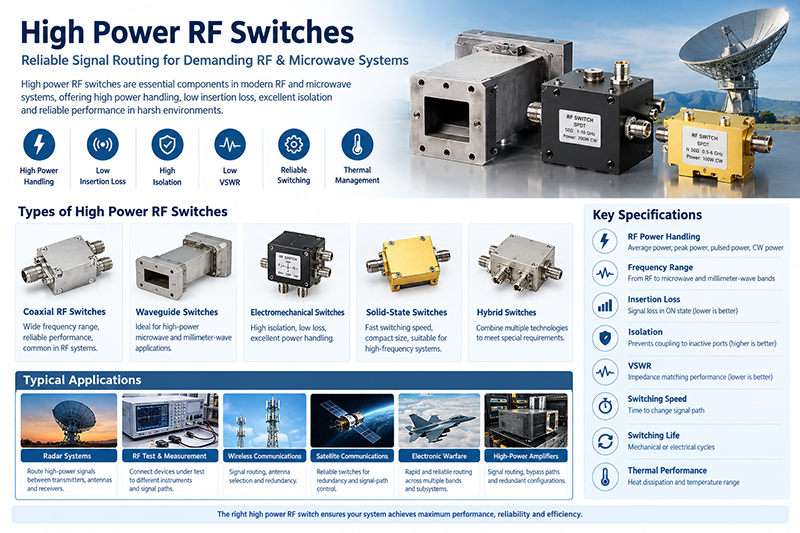
Types of RF Switches Used in 5G Testing Systems
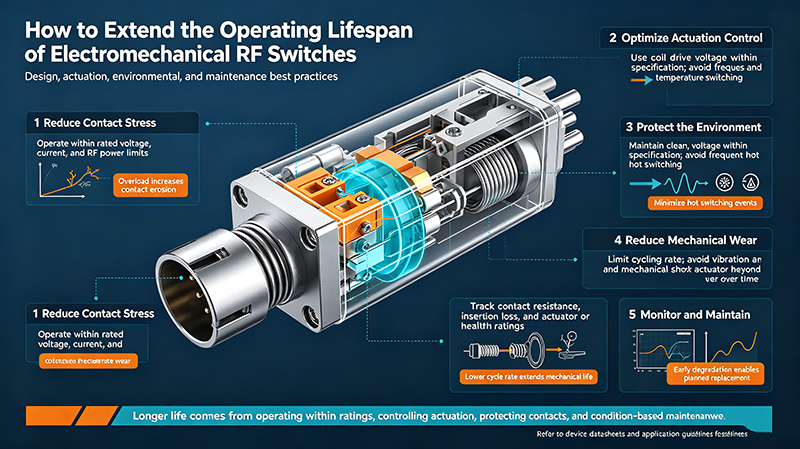
Electromechanical RF Switches
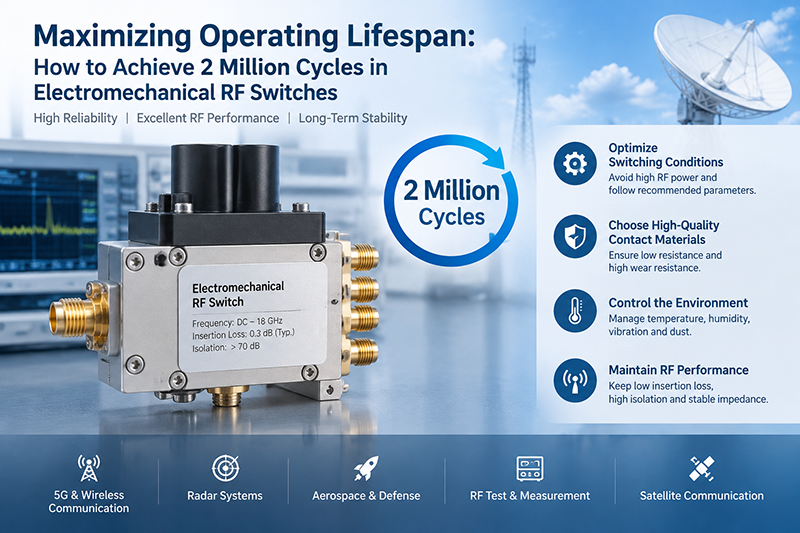
Electromechanical switches use physical contacts to control RF signal paths. They provide
excellent isolation, low insertion loss, and high power handling capability, making them
suitable for precision laboratory testing.
PIN Diode RF Switches
PIN diode switches offer fast switching speed and high reliability. They are commonly used
in applications requiring rapid signal switching and compact designs.
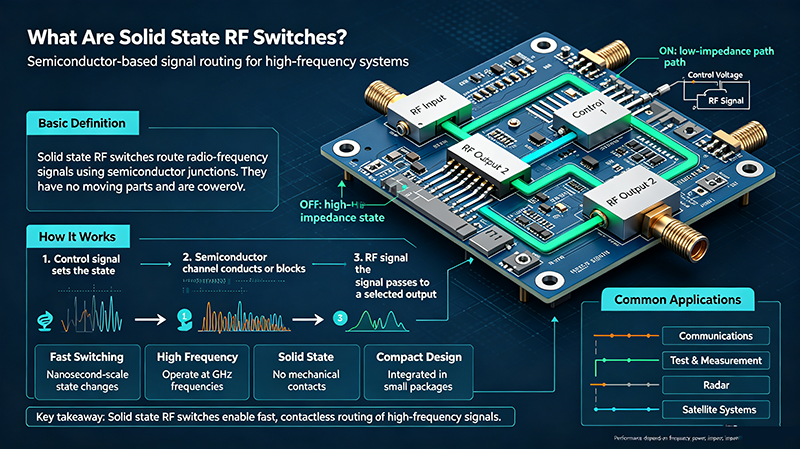
Solid-State RF Switches
Solid-state RF switches provide extremely fast switching speeds and long operational life.
They are ideal for automated test systems requiring millions of switching cycles.
Important RF Switch Specifications for 5G Testing
Selecting the right RF switch is essential for accurate 5G base station measurements.
Engineers should evaluate several key specifications:
-
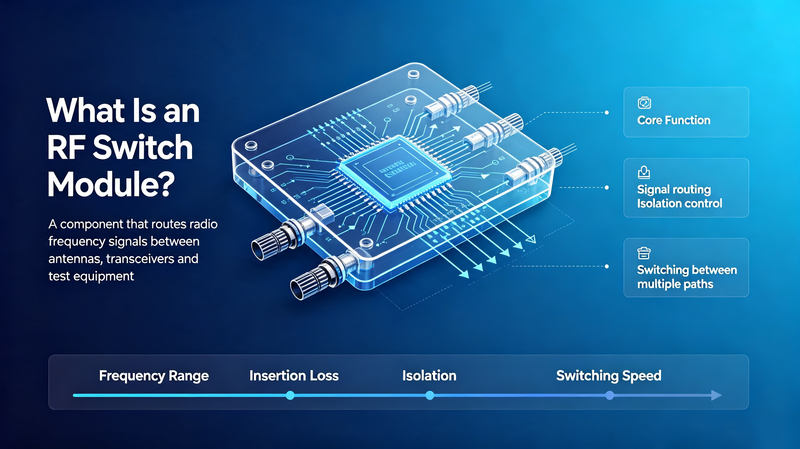
Frequency Range: The switch must support the required 5G frequency bands.
-
Insertion Loss: Lower insertion loss minimizes signal degradation.
-
Isolation: High isolation prevents interference between RF channels.
-
Switching Speed: Fast switching improves automated test throughput.
-
Power Handling: The switch must withstand the expected RF power levels.
-
VSWR: Low VSWR ensures better impedance matching and measurement accuracy.
Benefits of Using RF Switches for 5G Base Station Testing
-
Reduced manual cable connections and test errors
-
Higher testing speed and production efficiency
-
Flexible multi-channel test configurations
-
Improved measurement accuracy and repeatability
-
Lower overall testing costs
-
Support for future 5G technology upgrades
How to Choose the Right RF Switch for 5G Testing
When selecting an RF switch for 5G base station testing, engineers should consider the
frequency requirements, number of channels, switching performance, and environmental
conditions.
For high-frequency 5G applications, coaxial RF switches with excellent isolation and low
insertion loss are commonly preferred. For high-speed automated testing, solid-state or PIN
diode switches may provide better performance.
A properly selected RF switch improves test system flexibility while ensuring accurate
characterization of 5G base station performance.
Future Trends of RF Switches in 5G and Beyond
As wireless networks continue evolving toward 5G Advanced and future 6G technologies,
testing requirements will become more demanding. RF switches will need to support higher
frequencies, wider bandwidths, more channels, and faster switching speeds.
Advanced RF switching solutions will continue to play an important role in validating
next-generation communication systems, including massive MIMO, beamforming, millimeter-wave
networks, and satellite-based 5G connectivity.
Conclusion
RF switches are essential components in modern 5G base station testing systems. By
enabling automated signal routing, multi-channel measurements, and efficient test
workflows, RF switches help engineers achieve accurate and reliable performance
verification.
As 5G networks expand and communication technologies continue advancing, high-performance
RF microwave switches will remain a key technology for designing, manufacturing, and
maintaining next-generation wireless infrastructure.