






what is hot switching?
Hot switching is an important concept in RF engineering, microwave systems, electronics, power systems, and automated test equipment. Understanding what hot switching is, how it works, and why it matters can help engineers select the right RF switch and avoid performance degradation or premature component failure.
In many electronic systems, a switch changes its state while voltage, current, or RF power is still present. This operating condition is known as hot switching. Unlike cold switching, where the signal or power is removed before the switching operation, hot switching requires the device to transition between states under active electrical or RF conditions.
What Is Hot Switching?

Hot switching occurs when a switch changes from one electrical path to another while carrying an active signal or power. Depending on the application, the active energy may be DC voltage, AC current, RF power, microwave energy, or another electrical signal.
For example, consider an RF coaxial switch that routes a transmitter output between two different antennas. If the switch changes position while the transmitter is still producing RF power, the switch is performing a hot switching operation.
Hot switching can occur in many different types of equipment, including:
- RF and microwave switches
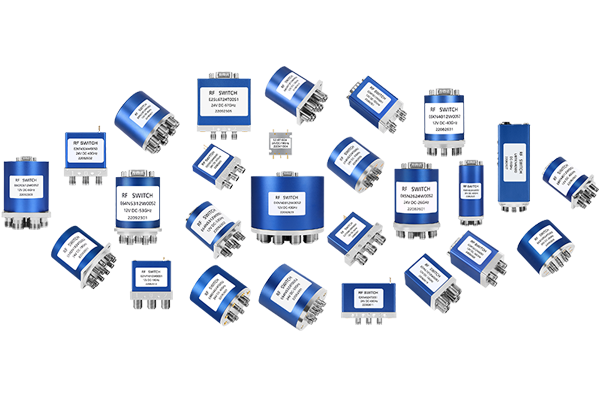
- Coaxial switches
- PIN diode switches
- Electromechanical relays
- Power switches
- Industrial control systems
- Automated test systems
- Communication systems
- Radar systems
- Satellite systems
The main challenge is that switching under power can create electrical stress. Depending on the switch technology and operating conditions, this stress may cause arcing, contact wear, signal distortion, transient energy, increased insertion loss, reduced isolation, or permanent damage.
How Does Hot Switching Work?
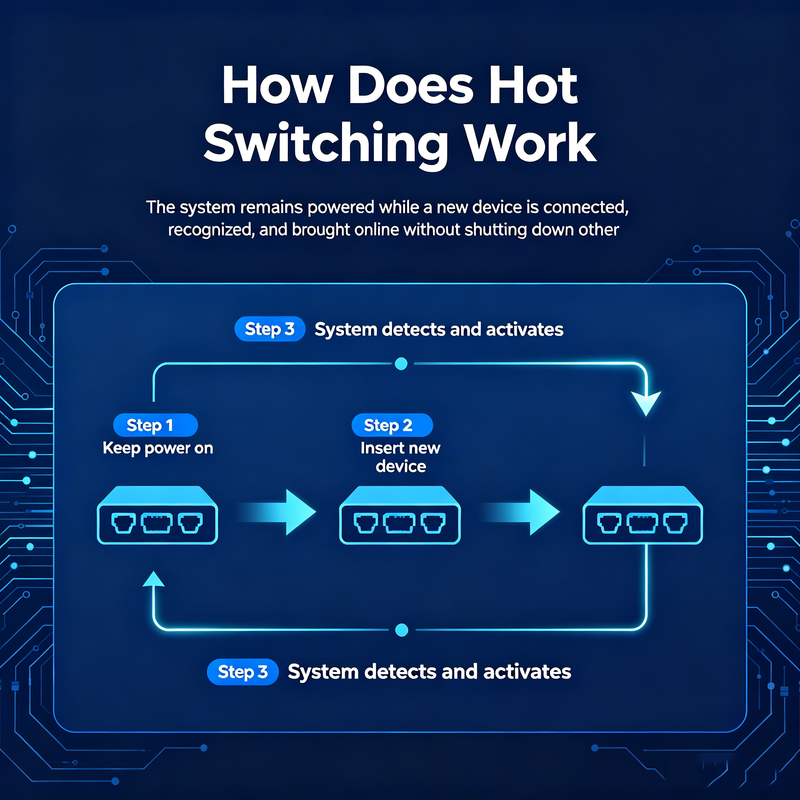
The exact hot switching mechanism depends on the type of switch being used. However, the general process is similar: the switch changes its electrical connection while energy continues to flow through the system.
1. Active Signal or Power Is Present
The circuit remains energized. In an RF system, this may mean that the transmitter continues to deliver RF power to the switch input.
2. The Switch Receives a Control Command
A manual control, electrical signal, actuator, or digital control system instructs the switch to move to another position.
3. The Switching Mechanism Changes State
The switch disconnects one path and connects another path. During this transition, the electrical conditions may change rapidly.
4. Transient Effects May Occur
Voltage spikes, current surges, RF reflections, contact arcing, or temporary impedance mismatches may occur during the switching interval.
Because the circuit remains active, the switching device must be designed to tolerate the electrical and thermal stress generated during the transition.
Hot Switching vs. Cold Switching
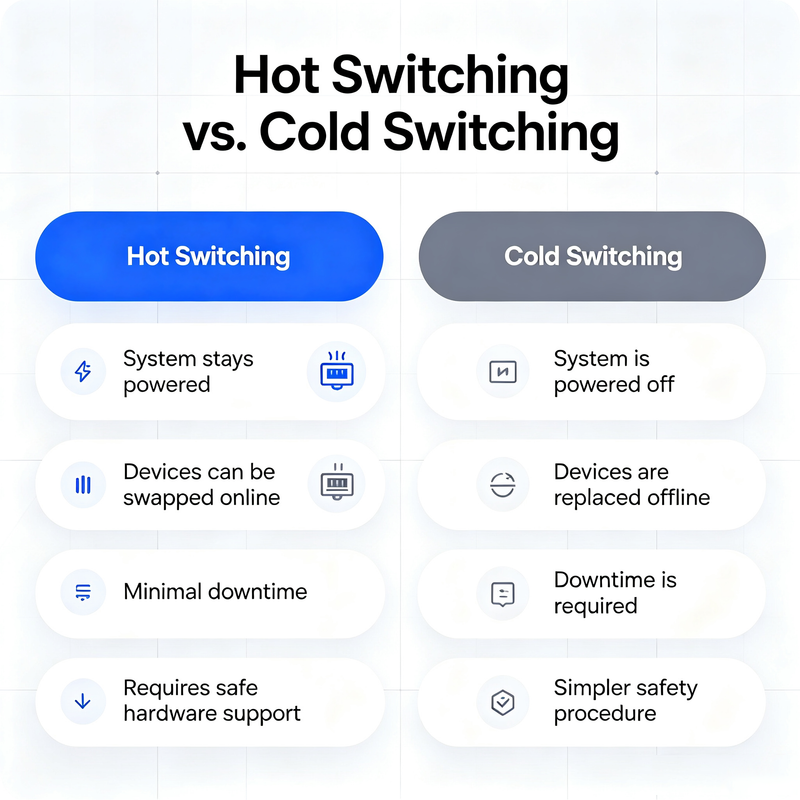
The difference between hot switching and cold switching is one of the most important considerations when selecting an RF switch or electrical switching device.
| Feature | Hot Switching | Cold Switching |
|---|---|---|
| Power during switching | Voltage, current, or RF power is present | Power or signal is removed before switching |
| Electrical stress | Higher | Lower |
| Contact wear | Can be significant in mechanical switches | Usually minimal |
| Arcing risk | Possible at higher voltage or power levels | Very low |
| RF transient risk | Higher | Lower |
| Switch life | May be reduced | Usually longer |
| System interruption | Often minimized | May require signal or power shutdown |
Cold switching is generally easier on a switching device because the switch changes position without carrying significant electrical energy. Hot switching is more demanding but is necessary in applications where the system cannot conveniently interrupt the signal or power before changing the switch state.
Why Is Hot Switching Important in RF Systems?
Hot switching is especially important in RF and microwave systems because RF switches often handle continuous or pulsed signals at high frequencies and significant power levels. Switching an active RF signal can produce temporary impedance changes and reflected energy.
RF systems typically operate around a characteristic impedance, commonly 50 ohms. When the switch is moving between positions, the impedance may temporarily deviate from the desired value. This can increase the voltage standing wave ratio and cause reflected power.
Where ZL is the load impedance and Z0 is the characteristic impedance of the transmission system. During a switching transition, temporary impedance discontinuities may increase reflections and electrical stress.
What Happens During RF Hot Switching?
During RF hot switching, several events may occur within a very short period of time.
RF Power Is Applied to the Switch
The RF switch receives continuous-wave, modulated, or pulsed RF power from a transmitter, signal generator, power amplifier, or other source.
The RF Switch Begins to Change Position
An electromechanical actuator or electronic control circuit starts changing the RF path. For a coaxial switch, mechanical contacts may physically move. For a solid-state switch, semiconductor devices change their conductive state.
The RF Path May Be Temporarily Disrupted
During the transition, the input may not be perfectly connected to either output path. The impedance can change, producing reflections and transient signals.
Power May Be Reflected
If the switch temporarily creates a mismatch, some RF power can be reflected toward the RF source. High reflected power can stress power amplifiers and other sensitive components.
The New RF Path Is Established
Once switching is complete, the signal is routed through the new path and normal operation resumes.
Hot Switching in Electromechanical RF Switches
Electromechanical RF switches, including coaxial switches, often use physical metal contacts to establish the RF connection. When switching occurs under active power, the contacts may experience additional stress.
Potential problems include:
- Contact arcing
- Contact erosion
- Metal transfer between contacts
- Increased contact resistance
- Reduced repeatability
- Higher insertion loss over time
- Reduced isolation
- Shorter operating life
The severity of these effects depends on factors such as voltage, current, RF power, frequency, switching speed, contact design, and load conditions.
Hot Switching in Solid-State RF Switches
Solid-state RF switches use semiconductor technologies rather than moving mechanical contacts. Common technologies include PIN diodes, GaAs devices, CMOS, and other semiconductor switching structures.
Solid-state switches can often switch much faster than mechanical switches and may provide excellent performance in applications requiring frequent switching. However, hot switching still creates important design challenges.
Potential concerns include:
- Maximum RF power handling capability
- Voltage breakdown
- Current handling capability
- Thermal stress
- Compression effects
- Intermodulation distortion
- Transient power spikes
- Control timing requirements
For high-power RF applications, the hot switching capability of a solid-state switch must be carefully evaluated against the actual operating power and frequency.
What Is Hot Switching Power?
Hot switching power is the maximum level of electrical or RF power that a switch can safely handle while changing its state.
This specification is different from the maximum power a switch can handle in a stable operating condition. A switch may be capable of carrying a relatively high RF power level when stationary but may have a much lower allowable power level during switching.
Factors That Affect Hot Switching Performance
1. Power Level
Higher RF or electrical power generally creates greater stress during switching. A higher power level can increase arcing risk in mechanical devices and electrical stress in semiconductor devices.
2. Frequency
At microwave frequencies, parasitic capacitance, inductance, impedance discontinuities, and signal reflections become increasingly important. Switch performance should be evaluated across the entire operating frequency range.
3. Voltage and Current
High voltage can increase the risk of electrical breakdown or arcing. High current can increase contact heating and semiconductor stress.
4. Load VSWR
A poorly matched load can reflect RF power back toward the switch. Under high VSWR conditions, the voltage and current inside the transmission system may be much higher than expected.
5. Switch Technology
Electromechanical, PIN diode, MEMS, GaAs, and CMOS switches have different hot switching capabilities and limitations.
6. Switching Speed
The amount of time spent in a transitional state can influence the amount of energy dissipated during switching.
7. Duty Cycle
Repeated hot switching can create cumulative wear or thermal stress. A switch that performs well for occasional hot switching may not be suitable for millions of high-power switching cycles.
Advantages of Hot Switching
Although hot switching creates additional engineering challenges, it provides several important advantages.
- Reduced system downtime: The signal does not need to be completely shut down before changing paths.
- Faster system operation: Automated systems can change configurations more efficiently.
- Improved test throughput: RF and microwave test systems can switch between devices or measurement paths without unnecessary interruptions.
- Support for real-time applications: Communication and radar systems may require rapid path changes during operation.
- Greater automation: Hot switching supports remote and computer-controlled switching systems.
Disadvantages and Risks of Hot Switching
The primary disadvantage of hot switching is increased stress on the switching device and associated components.
Reduced Switch Life
Mechanical contacts may wear faster when switching under electrical or RF power.
Arcing and Damage
High voltage or high-power conditions can cause arcing, contact damage, or permanent failure.
Signal Transients
Temporary signal interruptions or transients may affect sensitive circuits.
Higher Thermal Stress
Solid-state devices may experience increased heating and electrical stress during high-power switching.
How to Select a Switch for Hot Switching Applications
Selecting the right switch requires more than simply checking the frequency range and maximum power rating. Engineers should evaluate the complete operating environment.
Check the Hot Switching Power Rating
Confirm that the manufacturer specifically states the switch can perform hot switching at the intended power level.
Consider Frequency Range
The switch must maintain suitable insertion loss, isolation, VSWR, and power handling performance across the required RF or microwave frequency range.
Evaluate Switching Speed
Fast switching may be important for automated test equipment, radar, communication systems, and other time-sensitive applications.
Check Operating Life
For electromechanical switches, determine whether the rated life applies to cold switching, hot switching, or both.
Analyze the Load Match
High VSWR conditions can significantly increase reflected power. Select a switch with sufficient margin for the expected mismatch conditions.
Consider Failsafe Requirements
Some applications require a specific default position if control power is lost. Latching and failsafe switch designs should be selected according to system requirements.
How to Reduce the Risks of Hot Switching
Several engineering practices can help improve reliability in hot switching applications.
- Reduce power before switching when possible. Even a short reduction in RF power can significantly reduce stress.
- Use proper RF termination. A well-matched 50-ohm load helps reduce reflected power.
- Verify hot switching specifications. Do not rely only on maximum CW power ratings.
- Provide adequate thermal management. Heat sinks and proper PCB design can improve solid-state switch reliability.
- Use protective components. Limiters, attenuators, isolators, or circulators may protect sensitive equipment.
- Control switching timing. Proper sequencing can prevent unnecessary transient conditions.
- Allow sufficient power margin. Avoid operating continuously at the absolute maximum hot switching rating.
Common Applications of Hot Switching
RF and Microwave Test Systems
Automated test equipment often switches active RF signals between instruments, devices under test, antennas, and measurement paths.
Radar Systems
Radar systems may require rapid switching between transmit and receive paths or between multiple antennas and signal channels.
Satellite Communication
Satellite ground stations and communication systems may switch active microwave signals between redundant equipment or antenna paths.
5G and Wireless Infrastructure
Modern wireless systems can require high-speed signal routing, antenna switching, and automated testing while RF signals remain active.
Electronic Warfare Systems
Electronic warfare applications often require rapid signal routing across wide frequency ranges and under demanding power conditions.
Industrial Control Systems
In industrial electronics, switches and relays may change circuits while the system remains energized to support continuous processes.
Hot Switching Example
Consider a high-frequency RF test system using an SPDT coaxial switch. The common port is connected to an RF signal source, while the two output ports connect to two different devices under test.
If the RF source remains active while the switch changes from Port A to Port B, the switch is performing a hot switching operation.
The switch must safely handle:
- The applied RF power
- The operating frequency
- Potential impedance mismatch during switching
- Reflected RF power
- The required switching speed
- The number of switching cycles
If the switch is not designed for the required hot switching power, repeated operation can reduce reliability or cause immediate failure.
Hot Switching and RF Switch Specifications
When comparing RF switches for hot switching applications, several specifications should be reviewed together.
| Specification | Why It Matters |
|---|---|
| Frequency range | Ensures the switch operates correctly across the required RF or microwave band. |
| Hot switching power | Defines the power level the switch can handle while changing state. |
| Maximum RF power | Defines the power handling capability in a specified operating condition. |
| Insertion loss | Indicates signal loss through the active RF path. |
| Isolation | Shows how effectively unwanted signal leakage is blocked. |
| VSWR | Indicates impedance matching and reflected signal performance. |
| Switching speed | Determines how quickly the switch changes states. |
| Operating life | Helps estimate long-term reliability under specified conditions. |
Frequently Asked Questions About Hot Switching
What does hot switching mean?
Hot switching means changing the state of a switch while voltage, current, RF power, or another active electrical signal is still present in the circuit.
What is the difference between hot switching and cold switching?
Hot switching occurs while the circuit is energized, while cold switching occurs after the power or signal has been removed or reduced to a safe level.
Is hot switching bad for an RF switch?
Not necessarily. A switch designed and rated for hot switching can operate safely within its specified limits. However, exceeding the hot switching power, voltage, current, or frequency limits can reduce switch life or cause damage.
Why is hot switching power usually lower than maximum power?
The transition between switch states can create additional electrical stress, temporary impedance mismatches, reflections, arcing, and thermal effects. Therefore, the safe power level during switching may be lower than the power level allowed in a stable state.
Can solid-state switches perform hot switching?
Yes. Many solid-state RF switches are designed for hot switching applications. However, their capability depends on semiconductor technology, frequency, power level, voltage, thermal conditions, and control design.
How can I improve hot switching reliability?
Use a switch specifically rated for the application, maintain good impedance matching, reduce RF power before switching when possible, provide sufficient thermal management, and include adequate operating margin below the maximum rating.
Conclusion
Hot switching is the process of changing an electrical or RF switch while power or an active signal is still present. It is widely used in RF and microwave systems, communication equipment, radar, automated test systems, satellite applications, and industrial electronics. Because switching under power creates additional electrical, thermal, and mechanical stress, engineers must carefully evaluate hot switching power, frequency, VSWR, switching speed, technology, and operating life. Selecting a switch with the correct hot switching capability is essential for achieving reliable long-term system performance.
About the Author — MeiXun Team
Chief Engineer Wang
High-tech Enterprise, Feifeng Talent
Chief Engineer Wang graduated with a master's degree in high-power microwave from the Institute of Electronics, University of Chinese Academy of Sciences.
View Full Profile- RF Switch Circuit Diagram
- RF Switch
- Ohm's Law
- dBm to Watt
- mW to dBm
- Wavelength to Frequency
- RF Connector
- SMA Connector
- RF Switch Module
- RF Coupler
- RF PIN Switch
- Microwave Coaxial Switch
- PIN Switch
- Coaxial RF Switch
- Waveguide Switch
- Microwave Switch
- Low Noise Amplifier
- PIN Diode Switch
- Coaxial Switch
- RF Microwave Switch
- SPST Switch