






What Is High Frequency? Definition, Bands & Applications
Quick Answer
High frequency generally refers to radio frequencies above ~ 3 MHz — the boundary where electromagnetic waves become useful for wireless communications, radar, and high-speed digital signaling. In ITU usage, HF (High Frequency) is the specific band 3 – 30 MHz, while the generic term "high frequency" covers everything up to 300 GHz and beyond. At these frequencies, signal behavior depends on wavelength, transmission-line effects dominate, and specialized components like waveguides, filters, and antennas become essential.
Defining "High Frequency"
The term "high frequency" has two related meanings:
- Generic meaning: any signal at a frequency high enough that ordinary lumped-element circuit analysis fails. This generally begins around 100 kHz – 1 MHz and extends upward through radio, microwave, millimeter-wave, terahertz, infrared, and visible light.
- ITU meaning: the "High Frequency (HF)" band specifically refers to 3 – 30 MHz, used for shortwave radio, long-distance maritime, and aeronautical communications.
Electromagnetic Spectrum Overview
Electromagnetic Spectrum — Bands and Uses
The shaded region from HF to EHF (3 MHz – 300 GHz) is the standard "high frequency" range. VLF / LF / MF are lower frequency bands below 3 MHz.
ITU Radio Band Classification
| Band Name | Frequency Range | Wavelength |
|---|---|---|
| VLF (Very Low Frequency) | 3 – 30 kHz | 100 – 10 km |
| LF (Low Frequency) | 30 – 300 kHz | 10 – 1 km |
| MF (Medium Frequency) | 300 kHz – 3 MHz | 1 km – 100 m |
| HF (High Frequency) | 3 – 30 MHz | 100 – 10 m |
| VHF (Very High Frequency) | 30 – 300 MHz | 10 – 1 m |
| UHF (Ultra High Frequency) | 300 MHz – 3 GHz | 1 m – 100 mm |
| SHF (Super High Frequency) | 3 – 30 GHz | 100 – 10 mm |
| EHF (Extremely High Frequency) | 30 – 300 GHz | 10 – 1 mm |
| THF (Tremendously High Frequency) | 300 GHz – 3 THz | 1 mm – 100 µm |
Why High Frequency Behaves Differently
As frequency rises, the wavelength shrinks, and many physical effects that are negligible at low frequencies become dominant:
- Wavelength: at 3 MHz, λ ≈ 100 m; at 30 GHz, λ ≈ 1 cm. Once the wavelength approaches the size of conductors and PCB traces, transmission-line behavior replaces lumped-element behavior.
- Skin effect: at high frequencies, current flows only on the surface of conductors, increasing effective resistance and loss.
- Parasitic inductance and capacitance: every wire has L and C; at high frequencies these form unintended filters and resonators.
- Radiation: conductors longer than λ/10 begin to act as antennas, both receiving and emitting.
- Dielectric loss: PCB substrate and insulator losses rise with frequency.
- Matching becomes critical: 50 Ω (or other) impedances must be controlled.
High-Frequency Design Techniques
Controlled Impedance
Traces and cables are designed as 50 Ω (or 75 Ω) transmission lines. Impedance discontinuities cause reflections and standing waves.
Shielding & Enclosures
Metal enclosures prevent unwanted radiation and coupling between circuits. Critical above 100 MHz.
Ground Plane Design
A continuous ground plane under signal traces returns current predictably and reduces loop area.
SMD & Specialized Parts
Surface-mount components have lower parasitic inductance and capacitance than through-hole.
EM Simulation
HFSS, CST, Sonnet — electromagnetic simulators model full-wave behavior of structures.
VNA & S-Parameters
Vector network analyzers measure reflection and transmission (S-parameters) directly at high frequency.
RF Components Used at High Frequency
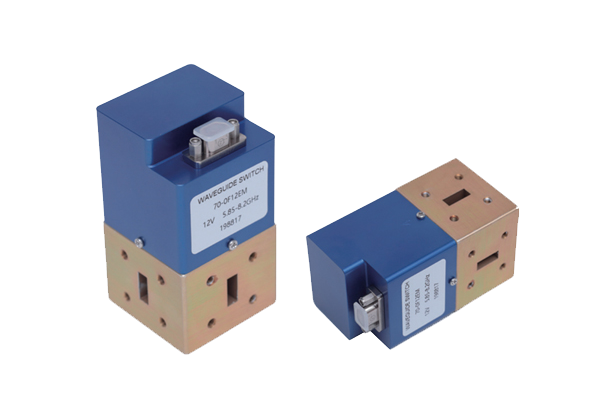
- Transmission lines: microstrip, stripline, coplanar waveguide, coax.
- Antennas: dipoles, patches, horns, helices, parabolic dishes.
- Filters: LC, ceramic, SAW, cavity, microstrip filters.
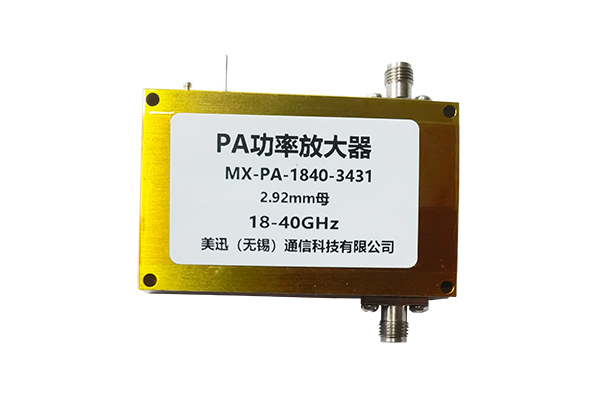
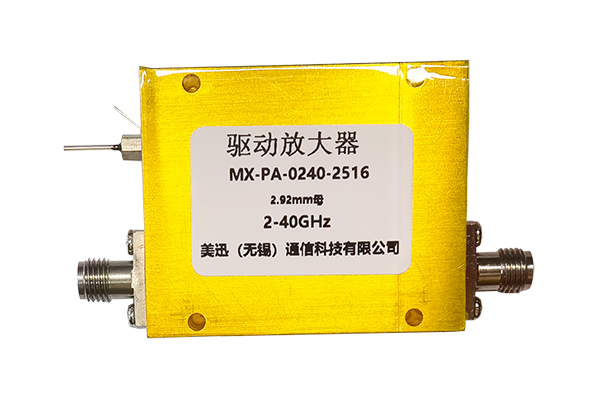
- Amplifiers: LNA, PA, GaN HEMT, LDMOS, GaAs pHEMT.
- Mixers: passive diode mixers, active Gilbert cells.
- Oscillators: crystal, VCO, DDS, PLL, dielectric resonator.
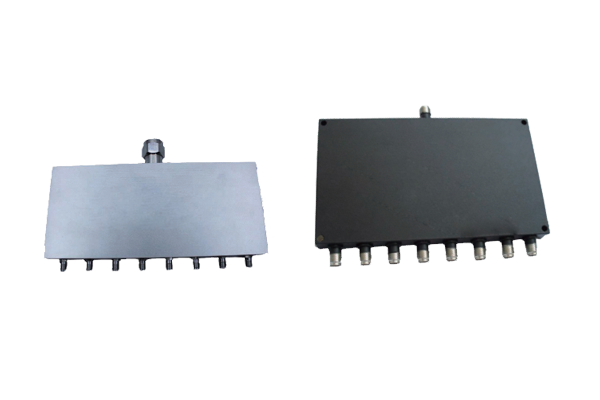
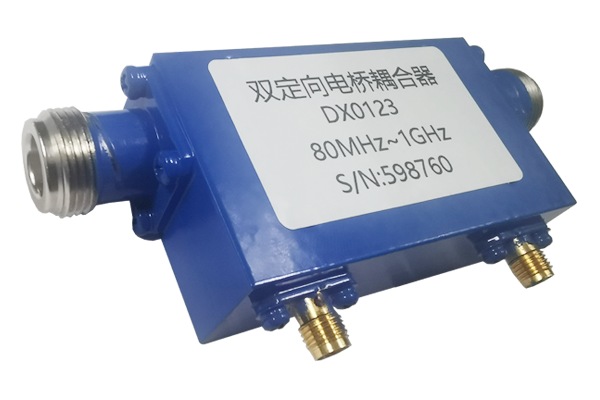
- Couplers & dividers: Wilkinson, hybrid, branch-line, directional couplers.
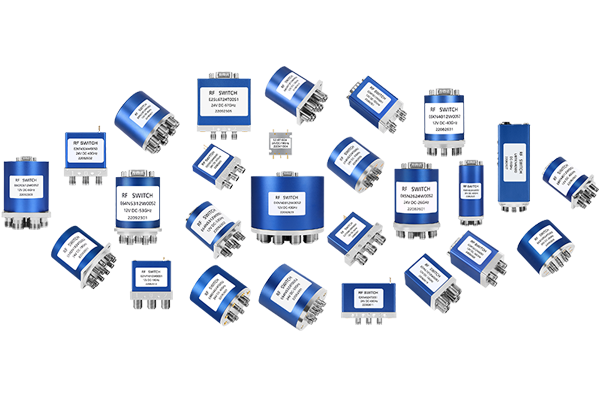
- Switches: PIN diode, FET, MEMS, coaxial mechanical.
Real-World Applications
3 – 30 MHz (HF Band, ITU)
- Shortwave broadcasting (BBC, Voice of America).
- Amateur radio (ham) worldwide communication.
- Maritime and aeronautical long-distance communication.
- Over-the-horizon (OTH) radar.
- RFID and inductive heating.
VHF (30 – 300 MHz)
- FM radio broadcast (88 – 108 MHz).
- VHF TV channels 2 – 13.
- Public safety, marine, aviation.
- Two-way radios and walkie-talkies.
UHF (300 MHz – 3 GHz)
- Cellular (700 MHz – 2.6 GHz).
- Wi-Fi 2.4 GHz.
- Bluetooth, Zigbee, LoRa.
- GPS (1.575 GHz L1, 1.227 GHz L2).
- UHF TV channels 14 – 83.
SHF / Microwave (3 – 30 GHz)
- Wi-Fi 5 / 6 (5 GHz, 6 GHz).
- 5G cellular FR1 and FR2.
- Radar (X-band 8 – 12 GHz, Ku-band 12 – 18 GHz).
- Satellite communication (C, X, Ku bands).
- Microwave ovens (2.45 GHz).
EHF / Millimeter-Wave (30 – 300 GHz)
- 5G mmWave (24, 28, 39, 60 GHz bands).
- Automotive radar (76 – 81 GHz).
- Wi-Fi 6E / Wi-Fi 7 (60 GHz).
- Scientific and security imaging.
HF vs. Low-Frequency Electronics
| Aspect | Low Frequency | High Frequency |
|---|---|---|
| Circuit Analysis | Lumped (R, L, C as separate) | Distributed (S-parameters, EM) |
| Wiring | Wire lengths unimportant | Wire length affects performance |
| Ground | Single node is fine | Ground plane and impedance critical |
| Components | Through-hole acceptable | SMD mandatory above 100 MHz |
| Tools | Multimeter, scope | VNA, spectrum analyzer, SA |
| Simulation | SPICE | SPICE + EM solver (HFSS, ADS) |
Common Mistakes
- Treating a wire as an ideal short: at 1 GHz, a 5 cm wire has meaningful inductance.
- Skipping impedance matching: reflections cause standing waves, loss, and EMI.
- Insufficient shielding: high-frequency circuits radiate easily and pick up interference.
- Ignoring skin effect: thin traces have more loss at high frequency.
- Mixing analog and digital grounds: high-speed digital return currents corrupt analog signals.
Key Takeaways
- High frequency generally means signals above ~ 3 MHz where transmission-line effects dominate.
- The ITU "HF" band specifically refers to 3 – 30 MHz (shortwave).
- Wavelength, skin effect, parasitics, and radiation all become important at high frequency.
- Use controlled impedance, ground planes, SMD parts, and S-parameter measurement.
- RF and microwave systems underpin communications, radar, broadcasting, and imaging.
Frequently Asked Questions
What is considered high frequency?
Generically, "high frequency" means signals above ~ 3 MHz where lumped-circuit analysis fails. The ITU also defines a specific HF band of 3 – 30 MHz for shortwave radio.
What is the difference between HF and VHF?
HF is 3 – 30 MHz, used for shortwave and long-distance communications. VHF is 30 – 300 MHz, used for FM broadcast, TV, and two-way radio. VHF signals behave more like line-of-sight propagation.
Why does high frequency need special design?
At high frequencies, signal wavelength shrinks to the size of circuit elements. Wires behave as transmission lines, parasitic L and C matter, and impedance matching is required. Without special care, signals are lost, distorted, or radiated as interference.
What frequency is microwave?
Microwave generally refers to frequencies from 1 GHz to 300 GHz, with 3 – 30 GHz called SHF and 30 – 300 GHz called EHF (millimeter-wave). Microwaves are used for radar, satellite, Wi-Fi, and 5G.
How is high frequency measured?
RF and microwave frequencies are measured using spectrum analyzers, vector network analyzers, frequency counters, and power meters — not standard oscilloscopes.
About the Author — MeiXun Team
Chief Engineer Wang
High-tech Enterprise, Feifeng Talent
Chief Engineer Wang graduated with a master's degree in high-power microwave from the Institute of Electronics, University of Chinese Academy of Sciences.
View Full Profile- RF Switch Circuit Diagram
- RF Switch
- Ohm's Law
- dBm to Watt
- mW to dBm
- Wavelength to Frequency
- RF Connector
- SMA Connector
- RF Switch Module
- RF Coupler
- RF PIN Switch
- Microwave Coaxial Switch
- PIN Switch
- Coaxial RF Switch
- Waveguide Switch
- Microwave Switch
- Low Noise Amplifier
- PIN Diode Switch
- Coaxial Switch
- RF Microwave Switch
- SPST Switch