


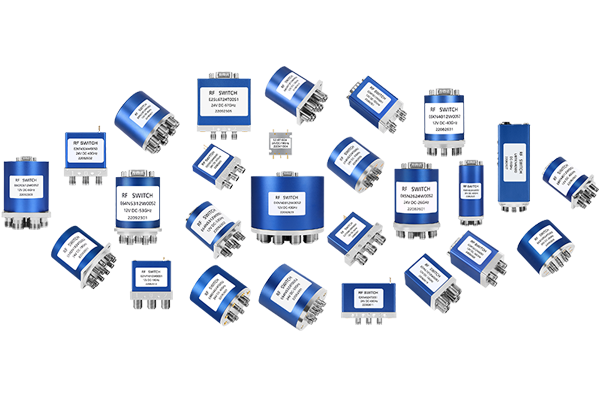
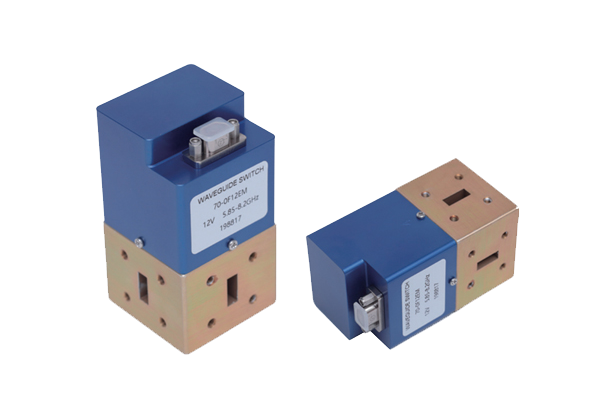
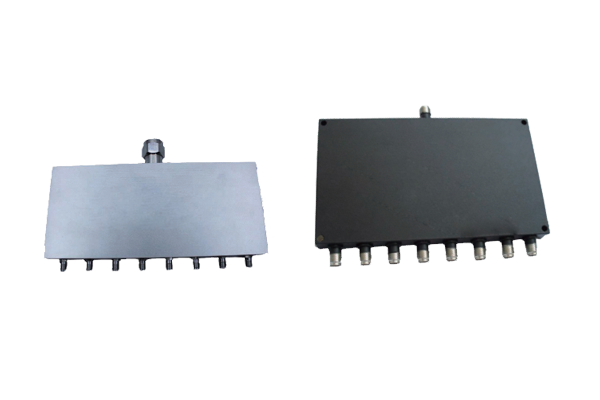
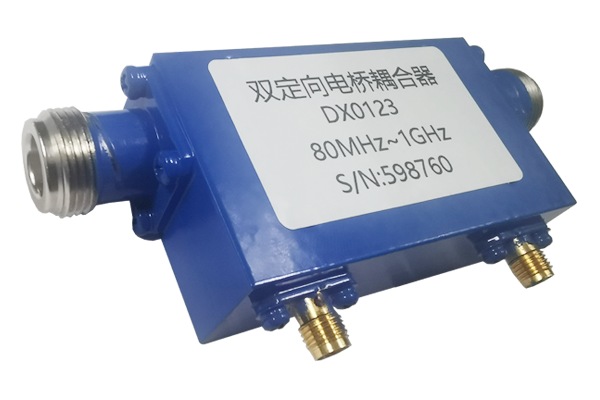
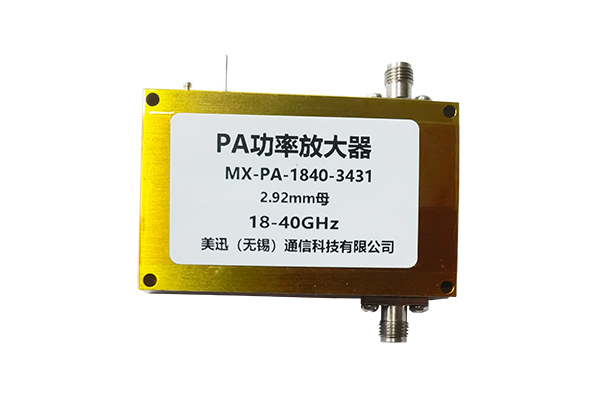
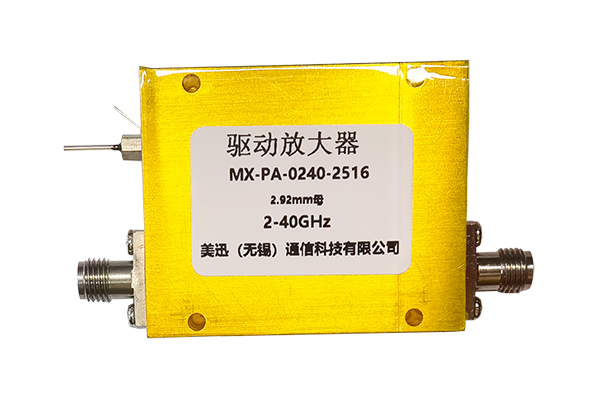




RF switches are essential components in modern communication systems, test equipment, radar systems, and microwave applications. When selecting an RF switch, engineers often need to decide between different configurations, including 2-pin switches and 4-pin switches.
Understanding the differences between 2-pin vs 4-pin switches is critical because the number of pins directly affects signal routing, isolation performance, insertion loss, control methods, and application flexibility.
What Is a 2-Pin Switch?
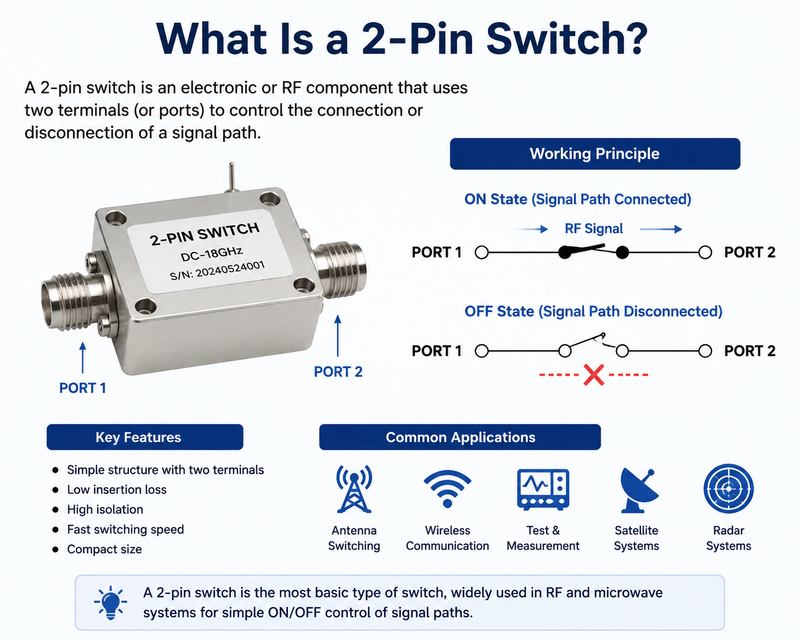
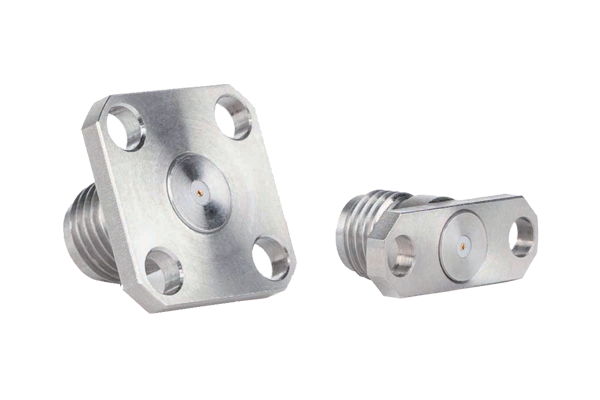
A 2-pin switch is a simple switching device that typically contains two electrical terminals or RF ports. It is commonly used for basic signal connection and disconnection applications where only one signal path needs to be controlled.
In RF applications, a 2-pin switch usually works as an ON/OFF switching element. When activated, the switch allows the RF signal to pass through. When disabled, it blocks or isolates the signal path.
Common Applications of 2-Pin Switches
- RF signal routing
- Antenna switching systems
- Wireless communication devices
- Simple test and measurement equipment
- Low-complexity microwave circuits
What Is a 4-Pin Switch?
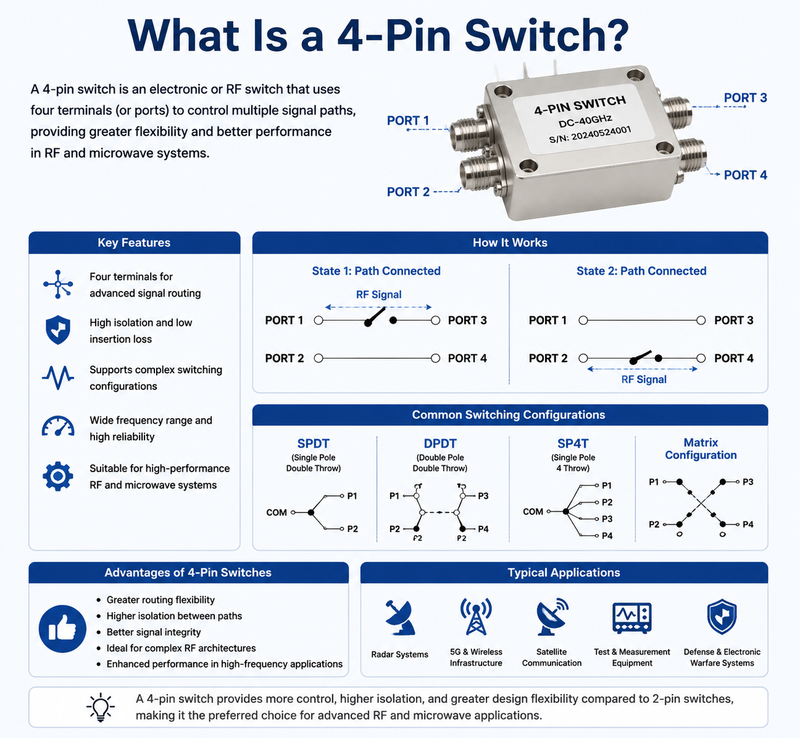
A 4-pin switch provides additional terminals compared with a 2-pin switch, allowing more complex signal control. It can support multiple switching paths, differential signal handling, or enhanced isolation configurations.
In RF and microwave systems, 4-pin switches are often designed to improve performance by providing better control flexibility, higher isolation, and more advanced signal management capabilities.
Common Applications of 4-Pin Switches
- High-frequency RF switching systems
- Radar and electronic warfare equipment
- 5G communication infrastructure
- Microwave test systems
- Multi-channel signal routing applications
2-Pin vs 4-Pin Switches: Key Differences
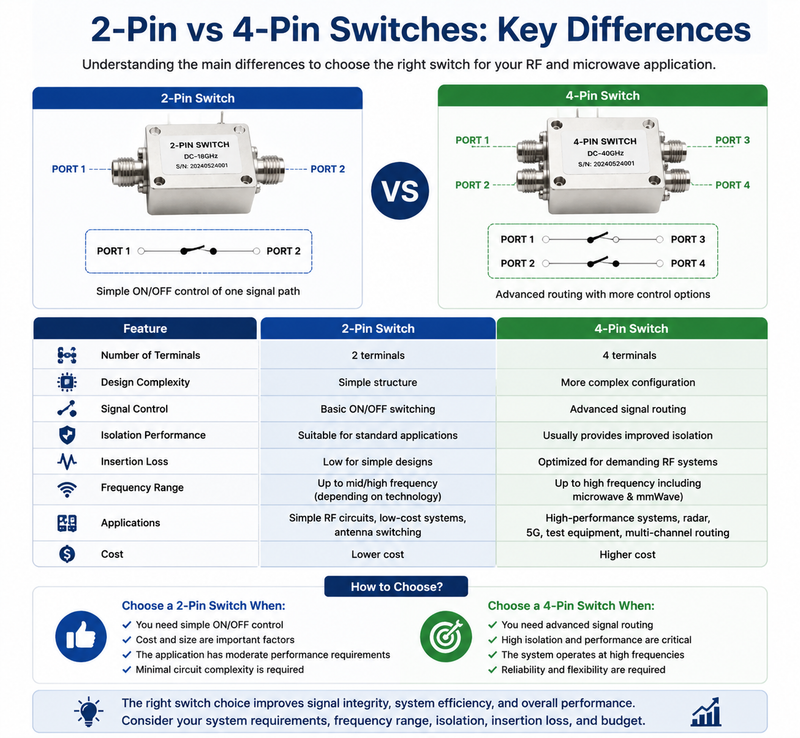
| Feature | 2-Pin Switch | 4-Pin Switch |
|---|---|---|
| Number of Terminals | 2 terminals | 4 terminals |
| Design Complexity | Simple structure | More complex configuration |
| Signal Control | Basic ON/OFF switching | Advanced signal routing |
| Isolation Performance | Suitable for standard applications | Usually provides improved isolation |
| Insertion Loss | Low for simple designs | Optimized for demanding RF systems |
| Applications | Simple RF circuits | Complex microwave systems |
Performance Comparison Between 2-Pin and 4-Pin Switches
1. Insertion Loss
Insertion loss is one of the most important parameters in RF switch selection. A lower insertion loss means less signal attenuation and better overall system efficiency.
2-pin switches generally have simpler structures, which can result in very low insertion loss. However, advanced 4-pin switches may provide optimized RF paths for high-performance applications.
2. Isolation Performance
Isolation measures how effectively a switch prevents unwanted signals from leaking between ports. Higher isolation is especially important in radar, satellite communication, and high-frequency testing systems.
Due to their additional control paths, 4-pin switches often achieve better isolation characteristics compared with basic 2-pin designs.
3. Frequency Range
Both 2-pin and 4-pin switches can operate across various frequency ranges depending on the technology used, including mechanical RF switches, PIN diode switches, and solid-state RF switches.
For millimeter-wave applications above 40GHz, switch design becomes more critical, and 4-pin configurations may provide advantages in maintaining signal integrity.
Advantages of 2-Pin Switches
- Simple design and easy integration
- Lower manufacturing cost
- Compact size
- Low insertion loss in basic applications
- Suitable for cost-sensitive RF systems
Advantages of 4-Pin Switches
- Greater switching flexibility
- Better signal control capability
- Higher isolation performance
- Suitable for complex RF architectures
- Improved performance in demanding microwave applications
How to Choose Between a 2-Pin and 4-Pin Switch?
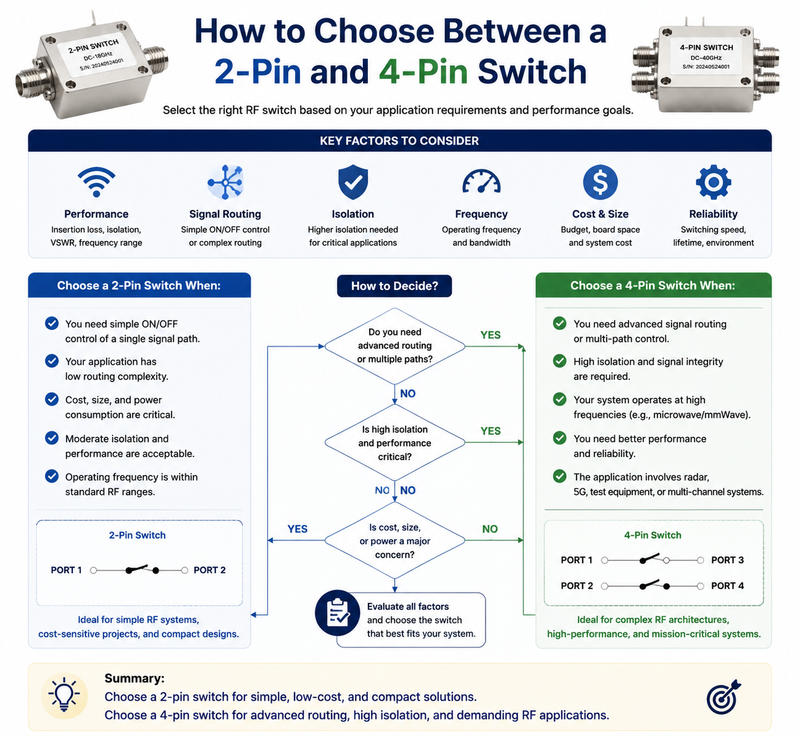
Choosing the correct RF switch depends on your system requirements, including frequency range, switching speed, power handling capability, isolation requirements, and budget.
Choose a 2-Pin Switch When:
- You need simple signal ON/OFF control
- The application requires minimal circuit complexity
- Cost and size are important factors
- The RF performance requirements are moderate
Choose a 4-Pin Switch When:
- You need advanced signal routing
- High isolation is required
- The system operates at high frequencies
- You need better RF performance and reliability
Applications of 2-Pin and 4-Pin RF Switches
- Wireless Communication: Used for antenna selection and RF path control.
- Radar Systems: Requires high isolation and fast switching performance.
- Satellite Communication: Uses RF switches for signal routing reliability.
- Test Equipment: Enables automated RF measurement systems.
- Defense Electronics: Requires advanced microwave switching solutions.
Conclusion: Which Switch Is Better?
The choice between 2-pin vs 4-pin switches depends on the complexity and performance requirements of your RF system. A 2-pin switch is ideal for simple switching applications that require compact size and low cost.
A 4-pin switch is a better option for advanced microwave systems that require improved isolation, flexible routing, and higher reliability.
For engineers designing high-frequency RF systems, selecting the right switch configuration can significantly improve signal quality, system efficiency, and long-term performance.