






What is the working principle of a Directional Coupler
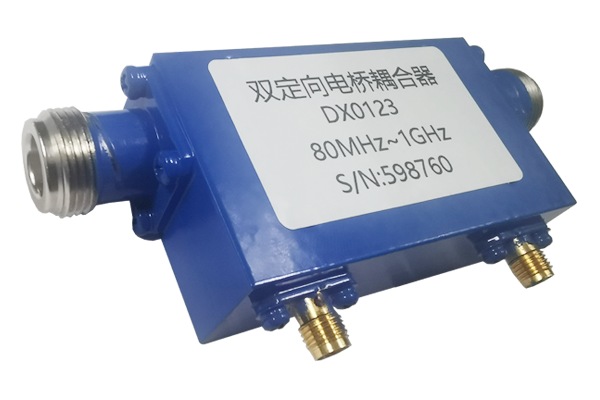
Directional Coupler
Fundamental principles · field coupling · wave interference · port isolation · RF power monitoring
Electromagnetic Field Coupling
- Energy transfer between adjacent transmission lines via electromagnetic fields
- No direct electrical connection — coupling occurs through proximity
- Signal in main line induces fields that extend into coupled line
- Coupling strength defined by spacing and parallel-section length
Wave Interference & Cancellation
- Directional property achieved by superposition of forward & backward waves
- Destructive interference cancels signals in the unwanted direction
- Constructive reinforcement strengthens desired forward power flow
- Selective cancellation ensures output only from the intended direction
Port Configuration & Isolation
- Four distinct ports: input, output, coupled (forward sample), and isolated port
- Input accepts main signal; output delivers transmitted power to load
- Coupled port samples forward power; isolated port measures reflected wave
- High isolation prevents signal leakage and ensures accurate separation
Applications in Power Monitoring
- Real-time analysis of transmitter output and antenna match without interrupting main power
- Samples small fraction of signal for reflection coefficient measurement
- Protects amplifiers from high standing wave ratios (SWR)
- Indispensable for network analysis, system tuning, and incident/reflected wave separation