



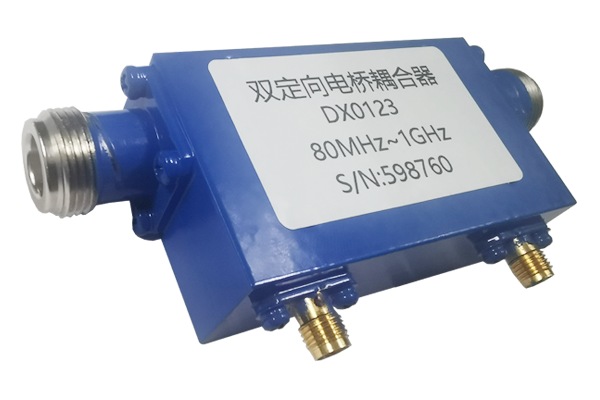
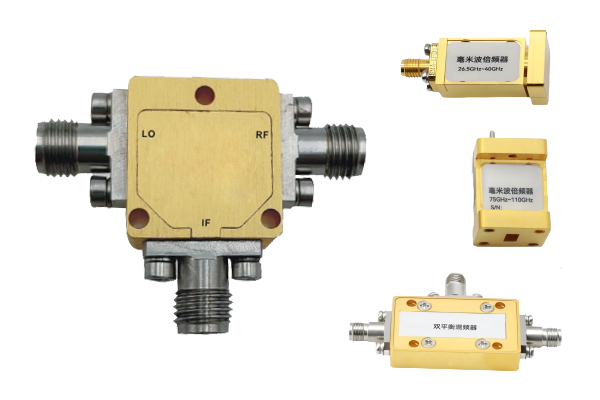




What are the functions of a dual directional coupler
1. Bidirectional Signal Sampling
- The core function of a dual directional coupler is to achieve bidirectional signal sampling.
- Unlike ordinary couplers that can only extract signals in one direction, it can simultaneously extract forward and reverse RF signals from the main transmission line.
- Without interfering with the normal transmission of the main signal, it accurately captures the signal characteristics in both directions, providing comprehensive data support for subsequent signal analysis.
- It is a key component for achieving bidirectional signal monitoring.
2. Bidirectional Signal Monitoring
- Based on its bidirectional signal sampling capability, the dual directional coupler can achieve bidirectional signal monitoring of the RF system.
- It can monitor the transmission status of the forward main signal in real time, determine whether there are anomalies such as signal distortion or attenuation, and also capture changes in the reverse signal, promptly detecting signal reflection, line faults, and other problems.
- This provides a reliable basis for system debugging and troubleshooting, ensuring stable system operation.
3. Signal Isolation and Protection
- The dual directional coupler has excellent signal isolation performance, effectively isolating forward and reverse signals, preventing mutual interference between the two directions, and ensuring the purity of the sampled signal.
- Simultaneously, it isolates the main line from the sampling branch, preventing signal feedback from the sampling link from affecting the main signal transmission, protecting backend detection equipment from excessively high-power signal impact, and extending equipment lifespan.
4. System Performance Optimization
- The bidirectional directional coupler, through precise bidirectional signal sampling and monitoring, helps optimize RF system performance.
- By analyzing bidirectional signal parameters, system impedance matching can be precisely adjusted, reducing signal loss and improving signal transmission efficiency; simultaneously, based on reverse signal feedback, system design can be optimized, solving signal reflection problems, significantly improving the stability and reliability of the entire RF system, and adapting to more complex application scenarios.