








Waveguide Switch Heat Dissipation Structure
Waveguide Switch Heat Dissipation
Critical design considerations for thermal management in waveguide switches, essential for stable operation in high-frequency, high-power applications.
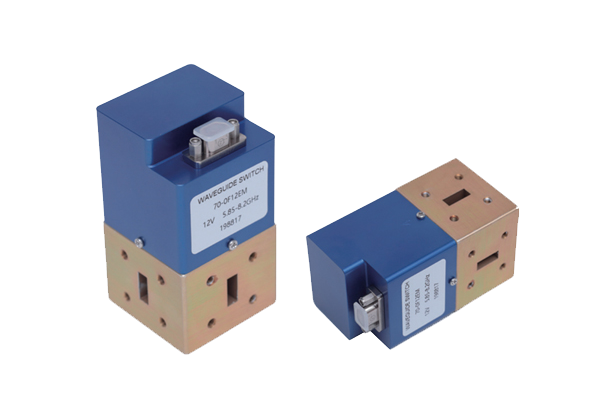
The heat dissipation structure is crucial for ensuring the stable performance of waveguide switches during long-term operation, especially in high-frequency, high-power scenarios. Good heat dissipation prevents damage from overheating and ensures reliable signal transmission. The heat dissipation structure design of waveguide switches needs to consider their characteristics and operating environment.
1
Cavity Heat Dissipation Structure
- Core component: The cavity is the core load-bearing component of the waveguide switch, and its design directly affects overall heat dissipation.
- Surface area optimization: Increasing cavity surface area improves heat dissipation efficiency through shape and contour optimization.
- Heat conduction channels: Designing reasonable internal heat conduction channels guides heat quickly to the exterior.
- Material selection: Using cavity materials with excellent thermal conductivity enhances heat transfer and avoids localized heat accumulation.
- Thermal management: Effective cavity design prevents performance degradation due to overheating in waveguide switches.
2
Heat Dissipation Fin Configuration
- Auxiliary structure: Heat dissipation fins are common auxiliary structures in waveguide switches for enhanced thermal management.
- Spacing balance: Fin spacing must balance heat dissipation area and airflow; too dense hinders airflow, too sparse reduces contact surface.
- Dimensional adaptation: Fin height and thickness must adapt to overall switch size and heat dissipation requirements.
- Connection quality: Fins must connect tightly to the cavity to reduce contact thermal resistance and improve thermal conductivity.
- Space optimization: Ensuring optimal heat dissipation within limited space constraints of waveguide switches.
3
Thermal Conductive Medium Selection
- Heat transfer bridge: Thermal conductive medium acts as a bridge for heat transfer in waveguide switch dissipation systems.
- Temperature adaptation: Selection must adapt to the switch's operating temperature and structural characteristics.
- Common media: Thermally conductive silicone and thermal pads must possess excellent thermal conductivity and insulation properties.
- Circuit protection: Materials must avoid interference with internal circuitry of the waveguide switch.
- Gap elimination: Medium must tightly fill gaps between components to eliminate thermal resistance from air layers.
4
Active Cooling Structure Design
- High-power scenarios: Passive cooling alone is insufficient for high-power, high-heat waveguide switch applications.
- Micro-fan cooling: Common active method that accelerates heat dissipation by forcing airflow over components.
- Placement strategy: Careful fan placement ensures uniform heat dissipation across the switch structure.
- Liquid cooling: Uses heat-conducting liquid circulation for heat removal, suitable for high heat dissipation requirements.
- Structural compatibility: Active cooling must be compatible with overall switch structure without affecting mechanical performance.