






RF Coupler Testing Methods
1. Coupling Degree Test
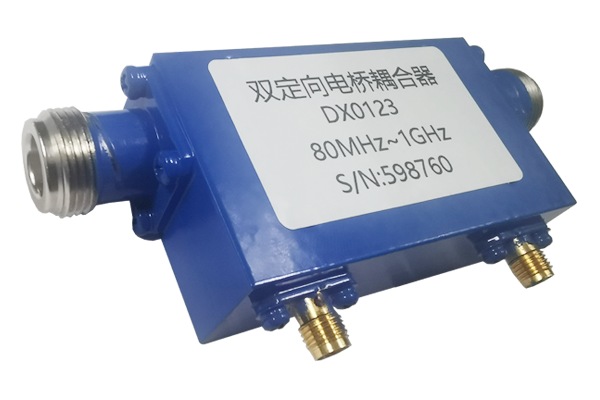
- Coupling degree testing is the most basic test for RF couplers.
- Its core function is to detect the coupler's ability to extract the signal from the main signal.
- During testing, the RF signal is input to the main transmission port, and the signal power output from the coupling port is measured using specialized equipment.
- The power correlation between the main signal and the coupled signal is compared to determine whether the coupling degree meets application requirements, ensuring that the coupler can accurately extract the required signal without affecting the normal transmission of the main signal.
2. Directivity Test
- Directivity testing verifies the coupler's selectivity to signal direction.
- During testing, forward and reverse signals are input to the main transmission port respectively, and the signal output of the coupling port is measured.
- This determines whether the coupler can effectively suppress reverse signal interference, ensuring that only the forward main signal is extracted and preventing reverse signals from entering the sampling link, thus guaranteeing the purity of the coupled signal and the accuracy of detection.
3. Loss Test
- Loss testing mainly detects the signal loss of the coupler during signal transmission, including insertion loss and isolation loss.
- During testing, the difference between the main signal input power and output power, as well as the signal isolation effect between each port, are measured using equipment to determine whether the loss is within a reasonable range, avoiding excessive loss from affecting the signal transmission efficiency and stability of the RF system.
4. Stability Test
- Stability testing verifies the coupler's performance under different environments.
- Simulating environmental conditions such as temperature and humidity in real-world applications, RF signals are continuously input, and the signal output changes at each port of the coupler are observed to check whether its performance parameters remain stable.
- This ensures the coupler can operate reliably for a long time in complex working environments, meeting the usage requirements of actual application scenarios.