


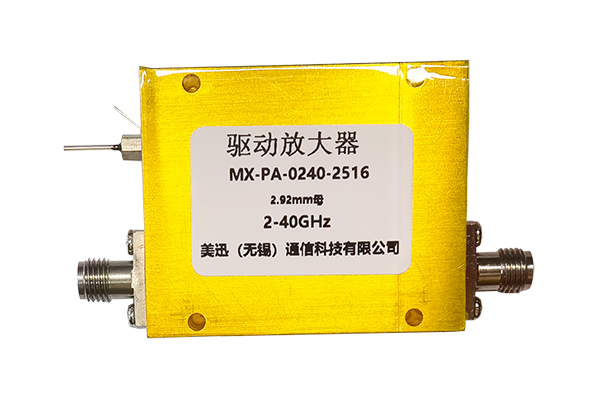




Key points for designing low-noise amplifiers
When designing low-noise amplifiers, multiple points need to be considered comprehensively to ensure that their performance is optimal. Here are some key design points:
1. Device selection
Active devices: Selecting low-noise transistors is the basis. Field effect transistors (FETs) and high electron mobility transistors (HEMTs) are often used in low-noise amplifier designs because they have low noise figures and good high-frequency performance. For example, in the millimeter-wave frequency band, HEMTs can exhibit excellent low-noise characteristics.
Passive components: The quality and characteristics of passive components such as resistors, capacitors, and inductors will also affect the performance of the amplifier. Low-noise, high-precision components should be selected, and the impact of the component's parasitic parameters on the circuit should be considered.
2. Noise optimization
Minimum noise matching: By designing the input matching network, the input impedance of the amplifier and the signal source impedance are matched to the minimum noise state. This can effectively reduce the additional noise introduced by the amplifier and improve the signal-to-noise ratio of the entire system.
Bias circuit design: Reasonably design the bias circuit to provide a stable operating point for the transistor. Improper biasing may cause the noise performance of the transistor to deteriorate, affecting the overall performance of the amplifier.
3. Gain design
Gain distribution: Reasonably distribute the gain of each amplifier stage to avoid excessive gain at a certain stage causing signal distortion. Generally, a multi-stage amplifier structure can be used, with each stage bearing appropriate gain to achieve overall high gain and ensure signal quality.
Matching network: Design appropriate input and output matching networks to achieve maximum power transmission and gain. The matching network should be optimized according to the characteristics and operating frequency of the transistor.
4. Stability design
Stability analysis: During the design process, the stability of the amplifier should be analyzed to ensure that it can work stably throughout the entire operating frequency band to avoid self-oscillation.
Stabilization measures: Negative feedback technology, stabilization network and other methods can be used to improve the stability of the amplifier. For example, add appropriate resistance or inductance to the source or emitter of the transistor, and introduce negative feedback to improve stability.
5. Bandwidth design
Broadband matching: If the application requires a wider bandwidth, a broadband matching network needs to be designed so that the amplifier can maintain good gain and noise performance over a wider frequency range.
Frequency response adjustment: By reasonably selecting component parameters and circuit structure, the frequency response of the amplifier can be adjusted to meet specific bandwidth requirements.
1. Device selection
Active devices: Selecting low-noise transistors is the basis. Field effect transistors (FETs) and high electron mobility transistors (HEMTs) are often used in low-noise amplifier designs because they have low noise figures and good high-frequency performance. For example, in the millimeter-wave frequency band, HEMTs can exhibit excellent low-noise characteristics.
Passive components: The quality and characteristics of passive components such as resistors, capacitors, and inductors will also affect the performance of the amplifier. Low-noise, high-precision components should be selected, and the impact of the component's parasitic parameters on the circuit should be considered.
2. Noise optimization
Minimum noise matching: By designing the input matching network, the input impedance of the amplifier and the signal source impedance are matched to the minimum noise state. This can effectively reduce the additional noise introduced by the amplifier and improve the signal-to-noise ratio of the entire system.
Bias circuit design: Reasonably design the bias circuit to provide a stable operating point for the transistor. Improper biasing may cause the noise performance of the transistor to deteriorate, affecting the overall performance of the amplifier.
3. Gain design
Gain distribution: Reasonably distribute the gain of each amplifier stage to avoid excessive gain at a certain stage causing signal distortion. Generally, a multi-stage amplifier structure can be used, with each stage bearing appropriate gain to achieve overall high gain and ensure signal quality.
Matching network: Design appropriate input and output matching networks to achieve maximum power transmission and gain. The matching network should be optimized according to the characteristics and operating frequency of the transistor.
4. Stability design
Stability analysis: During the design process, the stability of the amplifier should be analyzed to ensure that it can work stably throughout the entire operating frequency band to avoid self-oscillation.
Stabilization measures: Negative feedback technology, stabilization network and other methods can be used to improve the stability of the amplifier. For example, add appropriate resistance or inductance to the source or emitter of the transistor, and introduce negative feedback to improve stability.
5. Bandwidth design
Broadband matching: If the application requires a wider bandwidth, a broadband matching network needs to be designed so that the amplifier can maintain good gain and noise performance over a wider frequency range.
Frequency response adjustment: By reasonably selecting component parameters and circuit structure, the frequency response of the amplifier can be adjusted to meet specific bandwidth requirements.