






How to Improve the Isolation of a Dual Directional Coupler
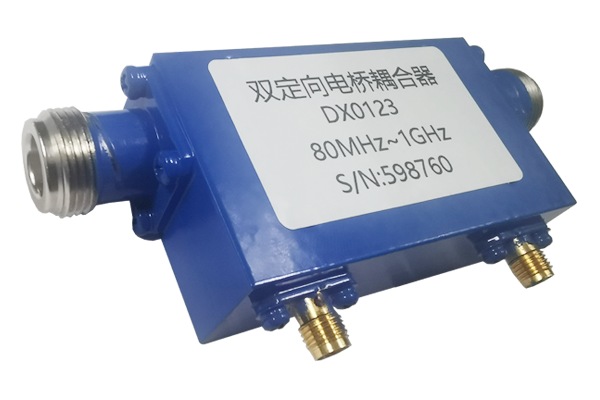
The isolation of a dual directional coupler is one of its core performance indicators, directly affecting the signal stability of RF and microwave systems and preventing interference caused by reverse signal leakage. The following four key aspects illustrate methods to improve its isolation and ensure the device's performance meets standards.
1. Optimize Structural Parameter Design
- Appropriately adjust the width and spacing of the coupling lines to balance coupling strength and manufacturing stability, avoiding signal leakage caused by excessively close or distant coupling.
- Optimize the characteristics of the dielectric substrate to ensure consistent dielectric constant, reducing the decrease in isolation caused by phase velocity mismatch.
- Simultaneously, control the substrate thickness to suppress the impact of edge radiation on isolation performance.
2. Improve Odd-Mode Impedance Matching
- Use odd-mode analysis to precisely control the odd-mode impedance, ensuring a reasonable phase relationship between the two within the operating frequency band to cancel out reverse signals.
- Optimize impedance parameters through electromagnetic simulation, correct related designs in the coupling region, and reduce reflected signals caused by impedance mismatch, thereby improving the isolation effect.
3. Introduce Compensation Structures to Suppress Leakage
- Adding appropriate compensation structures to the isolation ports can effectively suppress reverse signal leakage.
- Common compensation methods include loading open-circuit microstrip stubs to achieve capacitive compensation and improve high-frequency matching; and setting up grounded short-circuit structures to guide surface waves to ground, reducing crosstalk and edge radiation, and further improving isolation performance.
4. Optimize Circuit Layout and Manufacturing Process
- Rational circuit layout planning reduces signal interference between ports and avoids overlapping transmission paths.
- Improving manufacturing process precision ensures consistency of structural parameters and reduces isolation fluctuations caused by processing errors.
- Simultaneously, combining relevant structures to suppress common-mode noise further optimizes the isolation effect and meets system operating requirements.