


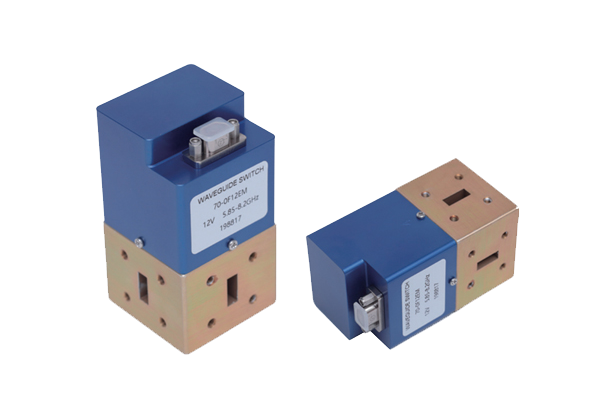




How does a Waveguide Switch switch signals
1. Electromagnetic Path Selection
- The device directs high frequency microwave energy by physically altering the internal transmission route within the metal structure.
- Waveguide Switches move a conductive element to block or open specific channels instantly without signal loss.
- This mechanical action ensures that electromagnetic waves travel only along the desired path while isolating unused ports effectively.
- The precision of this path selection is critical for maintaining signal integrity in radar and communication systems.
2. Mechanical Actuation Method
- Internal motors or solenoids drive the movement of metal vanes or plungers that change the wave propagation characteristics.
- When activated these actuators shift the internal component to reflect or transmit the signal based on the required configuration.
- Waveguide Switches rely on this robust mechanical motion to handle high power levels that would damage solid state electronic components.
- The physical displacement creates a reliable barrier or conduit for the microwave energy flowing through the system.
3. Signal Isolation Technique
- The switching mechanism provides excellent isolation between input and output ports to prevent unwanted signal leakage or interference.
- By inserting a metallic obstacle into the wave path the device reflects energy away from the disconnected branch entirely.
- Waveguide Switches achieve superior isolation performance compared to other technologies due to the inherent shielding properties of the metal housing.
- This technique ensures that sensitive receivers are protected from high power transmitters operating on adjacent channels simultaneously.
4. Low Loss Transmission Design
- The internal geometry is engineered to minimize insertion loss so that signal strength remains high during the switching process.
- Smooth metal surfaces and precise alignment reduce reflections and absorption of microwave energy as it passes through the junction.
- Waveguide Switches maintain low loss characteristics even under extreme environmental conditions or after thousands of switching cycles.
- This efficient design allows systems to operate with maximum power efficiency and minimal heat generation during continuous signal routing operations.