







How do coaxial switches achieve signal switching
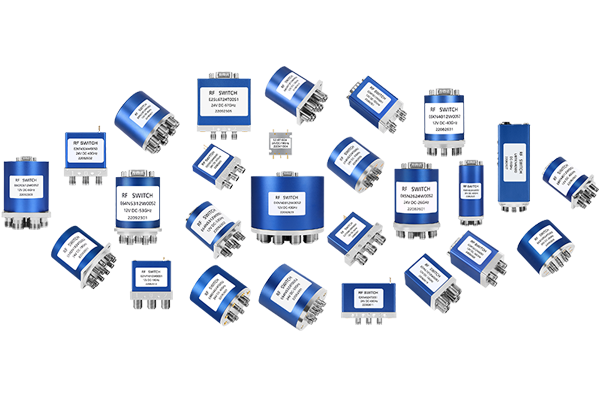
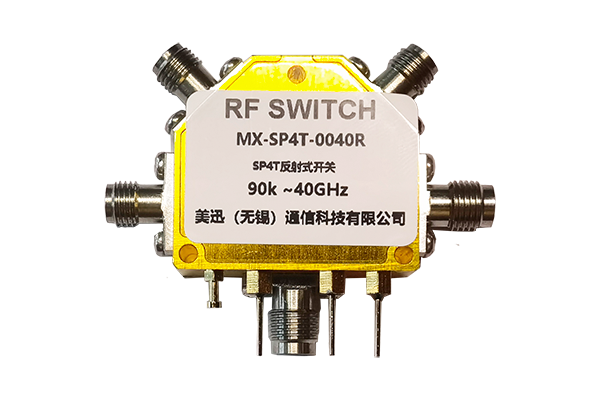
- Coaxial switches enable precise redirection of radio frequency signals through controlled mechanical reconfiguration within a fully shielded enclosure. Their operation centers on physically altering internal conductive pathways to establish or terminate electrical continuity between selected ports. This process preserves the coaxial geometry essential for maintaining signal fidelity and minimizing electromagnetic interference.
- Activation begins when an external command triggers an actuator, such as an electromagnetic solenoid or motorized mechanism. This initiates deliberate motion of a movable contact assembly, aligning it precisely with designated stationary terminals. Upon engagement, a seamless conductive path forms, allowing electromagnetic energy to propagate uninterrupted from input to output. Simultaneously, inactive routes are isolated to prevent signal leakage or crosstalk. Spring loaded components ensure firm contact pressure, reducing resistance and enhancing reliability across repeated transitions.
- Material selection critically influences performance. Contact surfaces feature noble metal plating to resist oxidation and sustain low resistance over time. High integrity dielectric materials separate conductors without introducing appreciable loss, while the robust outer housing provides comprehensive electromagnetic shielding. This dual role of containment and protection safeguards signal purity in demanding environments.
- These devices excel in applications requiring dynamic signal management, such as telecommunications infrastructure, aerospace systems, and automated test equipment. They empower operators to reconfigure complex networks remotely, eliminating manual cable adjustments and reducing operational errors. Key attributes include consistent impedance matching to avoid reflections, strong isolation between dormant pathways, and minimal degradation of signal quality during switching events. Engineering evolution continues to refine coaxial switching technology. Electromechanical designs remain valued for power handling and linearity, while solid state alternatives offer rapid transitions for specialized needs. Regardless of implementation, the core principle endures: translating a control input into a physical reconfiguration of the transmission path. This harmonious integration of mechanical precision and electromagnetic theory ensures coaxial switches remain indispensable components in advanced electronic ecosystems, celebrated for their durability, accuracy, and unwavering contribution to signal integrity.