


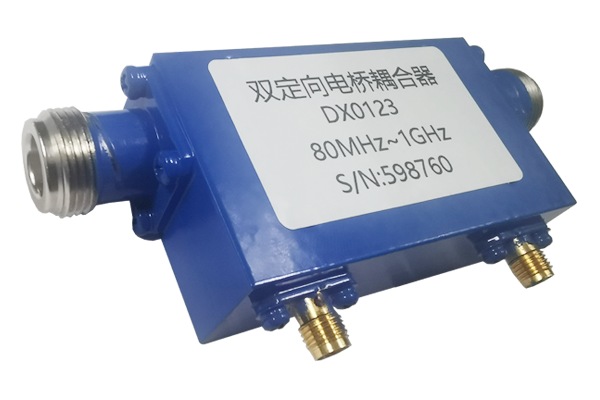




Frequency Response of a Dual Directional Coupler
📡 Frequency response · dual directional coupler
1. Define the Frequency Band Compatibility Range
- The frequency response of the dual directional coupler must precisely match the system's operating frequency band to ensure stable performance parameters within the target band.
- Avoid using it outside the compatible frequency band, as this will lead to coupling attenuation, decreased isolation, signal transmission distortion, and affect the normal operation of the entire RF microwave system.
- Devices in the corresponding frequency band must be selected based on system requirements.
2. Optimize Coupling Frequency Consistency
- Ensure stable coupling within the compatible frequency band and reduce coupling strength fluctuations caused by frequency changes.
- Optimize the coupling structure design to balance the electromagnetic coupling effect at different frequencies, avoiding situations where local frequency band coupling is too strong or too weak, ensuring the uniformity and reliability of signal coupling.
3. Improve Isolation and Frequency Stability
- The frequency response of isolation directly affects signal anti-interference capability, requiring ensuring that isolation performance meets standards across the entire operating frequency band.
- By optimizing impedance matching and structural layout, reverse signal leakage at different frequencies is suppressed, reducing the impact of frequency drift on isolation and preventing interference signals from affecting normal system operation.
4. Suppress Signal Distortion Within the Frequency Band
- To avoid signal distortion and phase shift within the operating frequency band, the impact of frequency changes on signal phase and amplitude is reduced by optimizing device structure and material selection.
- Insertion loss fluctuations within the frequency band are minimized, ensuring the signal retains its original characteristics after passing through the coupler and guaranteeing the accuracy of system signal transmission.